Selecting the right curing oven for a powder coating line or liquid painting line is a critical engineering decision that directly affects coating performance, production stability, energy consumption, and overall line efficiency. In industrial coating systems, the curing stage determines how well the coating film is formed, bonded, and hardened.
This guide explains the key technical factors to consider when choosing a curing oven and how to match the oven design with your production requirements.
Why the Curing Oven is Critical in a Coating Line
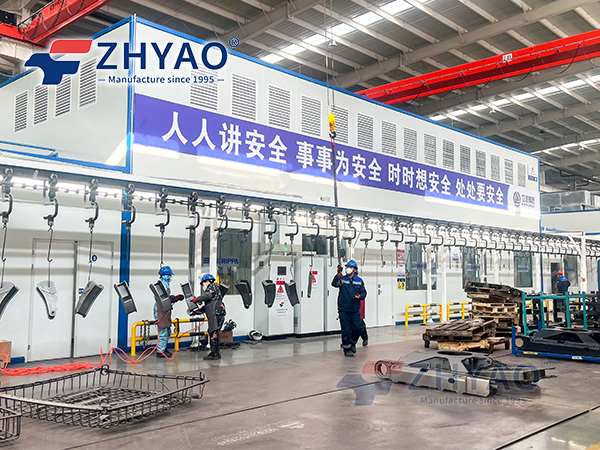
The curing oven is responsible for heating coated workpieces to a controlled temperature so that the coating material can chemically or physically crosslink and form a durable film.
If the curing process is unstable, it may lead to:
Poor coating adhesion
Uneven film hardness
Surface defects such as bubbles or discoloration
Reduced corrosion resistance
Inconsistent product quality
A properly designed oven ensures stable temperature distribution and consistent curing performance across all workpieces.
Understand Your Coating Type First
Different coating systems require different curing conditions.
Before selecting a curing oven, identify:
Powder coating or liquid paint system
Curing temperature range
Required curing time
Type of coating material (epoxy, polyester, PU, water-based, etc.)
For example, powder coatings typically require higher and more stable temperature control compared to many liquid coating systems.
Matching oven performance to coating chemistry is the first step in system design.
Choose the Right Heating Method
Industrial curing ovens generally use different heating technologies depending on energy availability and production requirements.
Gas Heating System
Common in large-scale production environments.
Advantages:
Lower operating cost in many regions
Suitable for long production lines
Stable heat output
Electric Heating System
Suitable for small to medium production lines or facilities without gas supply.
Advantages:
Easy installation
Precise temperature control
Cleaner operation
Infrared Heating System
Used for fast curing applications or space-limited layouts.
Advantages:
Rapid heat response
Short curing time
High energy efficiency in targeted heating
The heating method should be selected based on energy conditions, production scale, and process requirements.

Consider Oven Structure and Layout Integration
The curing oven must match the overall production line layout.
Common configurations include:
Tunnel-type curing ovens for continuous production
Box-type ovens for batch processing
L-shaped or customized designs for limited factory space
Key design considerations:
Conveyor entry and exit alignment
Heat insulation performance
Maintenance access points
Air circulation system design
A well-integrated oven reduces heat loss and improves production flow stability.
Temperature Uniformity is a Key Factor
One of the most important technical indicators of a curing oven is temperature uniformity.
Uneven temperature distribution may cause:
Inconsistent coating hardness
Partial under-curing or over-curing
Product quality variation
To ensure stable performance, ovens typically use:
Hot air circulation systems
Multiple temperature zones
Optimized airflow channels
Real-time temperature monitoring
For industrial coating lines, stable thermal balance is more important than peak temperature capability.
Match Oven Size with Production Capacity
Oven size should be determined based on:
Workpiece dimensions
Conveyor speed
Production throughput (pcs/hour)
Curing time requirement
An oversized oven may increase energy consumption, while an undersized oven can create production bottlenecks.
Proper capacity planning ensures smooth line balance between spraying, curing, and cooling processes.
Energy Efficiency and Heat Management
Energy consumption is a major operational cost in curing systems.
Key energy optimization factors include:
High-density thermal insulation materials
Heat recovery systems
Optimized air circulation design
Precise temperature control systems
Efficient heat management helps reduce long-term operating costs and improves environmental performance.
Safety and Maintenance Design
A reliable curing oven should also consider long-term operation safety and maintenance convenience.
Important design elements include:
Over-temperature protection systems
Emergency shutdown control
Accessible maintenance doors
Stable ventilation systems
Fire safety compliance
Good maintenance design reduces downtime and improves system lifespan.
Integration with the Full Production Line
The curing oven does not operate independently—it must match the entire coating system, including:
Pretreatment system
Powder or liquid coating booth
Conveyor system
Cooling zone
Poor integration may lead to production imbalance, even if the oven itself performs well.
Conclusion
Choosing the right curing oven requires a comprehensive evaluation of coating type, heating method, production capacity, temperature uniformity, and line integration. A well-designed curing system ensures stable coating quality, efficient energy use, and smooth production flow.
In modern industrial coating projects, the curing oven is not just a heating unit—it is a core part of the entire production system that directly influences final product performance.
Careful engineering evaluation at the early design stage helps ensure long-term operational stability and consistent coating results.