
Industry Insight
In modern powder coating and liquid painting production systems, pretreatment has become one of the most critical stages affecting final coating quality.
As industries move toward higher automation and stricter surface performance requirements, pretreatment systems are no longer optional auxiliary equipment. They are now an integrated part of turnkey coating line engineering.
A properly designed pretreatment system directly influences coating adhesion, corrosion resistance, and long-term product durability.
Role of Pretreatment in a Coating Line
Pretreatment is the foundation of any coating process.
Its main function is to remove surface contaminants such as:
Oil and grease
Rust and oxidation layers
Dust and fine particles
It also creates a chemically or mechanically active surface that improves coating adhesion.
In automated coating systems, pretreatment quality determines the stability of all downstream processes.
Types of Pretreatment Systems
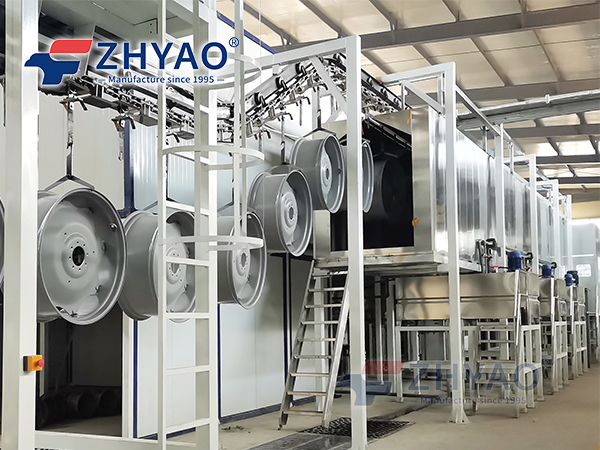
Different production requirements require different pretreatment technologies.
1. Chemical Pretreatment System
This system uses chemical solutions such as degreasing agents, phosphating, or passivation processes.
It is commonly used for:
Steel structures
Metal components
High corrosion resistance applications
It provides strong adhesion performance and long-term protection.
2. Mechanical Pretreatment System
Mechanical systems include:
Sandblasting
Shot blasting
Brush cleaning
These systems are suitable for:
Thick metal parts
Structural components
High-strength surface preparation
Mechanical pretreatment is widely used in heavy industrial coating lines.
3. Combined Pretreatment System
In advanced turnkey coating lines, chemical and mechanical methods are often combined.
This ensures:
Deeper surface cleaning
More stable coating adhesion
Better adaptation to different material
Key Engineering Factors for Selection
Selecting a pretreatment system depends on several engineering parameters.
Workpiece Material Type
Different materials require different pretreatment processes:
Steel requires rust removal and phosphating
Aluminum requires oxidation control
Mesh structures require low-residue cleaning systems
Production Capacity Requirements
Higher production speed requires:
Continuous pretreatment lines
Stable chemical circulation systems
Automated rinsing and drying modules
System capacity must match the coating line throughput.
Coating Performance Requirements
Higher performance coatings require more advanced pretreatment:
Anti-corrosion coatings require phosphating or passivation
Decorative coatings require fine surface uniformity
Industrial coatings require adhesion stability
Environmental and Layout Constraints
Factory conditions affect system design:
Space availability
Wastewater treatment requirements
Energy consumption limits
Production flow direction
Pretreatment systems must be integrated into the overall line layout.
Integration with Automated Coating Lines
In turnkey powder coating systems, pretreatment is not an independent unit.
It must be fully synchronized with:
Conveying system speed
Spraying system timing
Curing oven throughput
Poor integration can cause:
Uneven coating adhesion
Production bottlenecks
Quality instability
Therefore, system-level engineering is essential.
Common Selection Mistakes
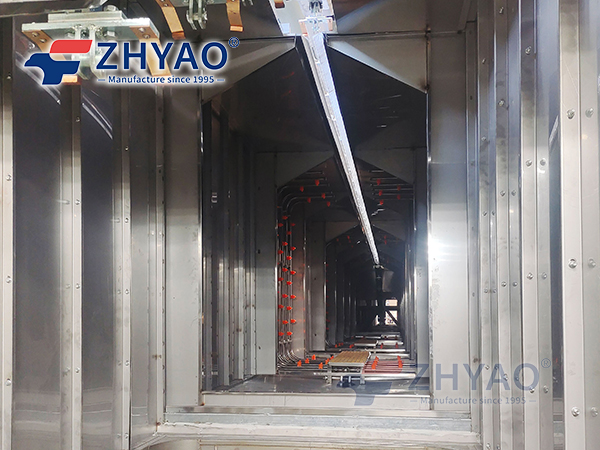
Many manufacturers make mistakes when selecting pretreatment systems:
Choosing systems based only on equipment price
Ignoring material-specific requirements
Overlooking wastewater or environmental systems
Mismatching pretreatment speed with coating line capacity
These issues often lead to unstable production performance.
Structured Engineering Summary
A pretreatment system should be selected based on:
Material type and surface condition
Production capacity and line speed
Coating performance requirements
Factory layout and environmental constraints
System integration level with coating line
Pretreatment is not a standalone process, but a core engineering component of the entire coating system.
Conclusion
The selection of a pretreatment system directly determines the stability and performance of a coating line.
In automated powder coating and painting systems, a well-designed pretreatment stage ensures consistent adhesion, improved durability, and stable long-term production output.
For turnkey coating projects, pretreatment design must always be evaluated as part of the complete system engineering process.
If you are planning a new automated coating line or upgrading an existing system, we can provide a customized pretreatment solution integrated into a full turnkey coating system based on your production requirements.