
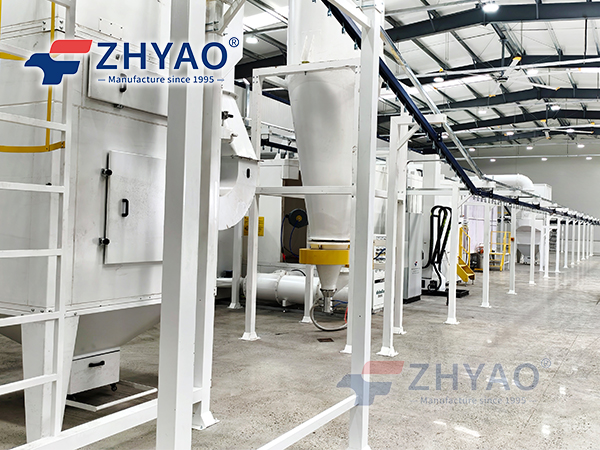
In modern manufacturing, powder coating production systems are evolving toward higher flexibility, scalability, and efficiency. Among these trends, modular design has become a key engineering approach that reshapes how coating lines are planned, built, and upgraded.
What is Modular Design in Powder Coating Systems?
Modular design refers to breaking down a complete powder coating line into independent functional units, or “modules.”
Each module performs a specific process such as pre-treatment, drying, powder application, curing, or powder recovery. These units can be independently configured, expanded, replaced, or rearranged depending on production requirements.
This structure allows manufacturers to build a fully customized system instead of relying on a fixed, one-size-fits-all production line.
Key Components of a Modular Powder Coating Line
A typical modular powder coating production system may include:
Pre-treatment modules (degreasing, washing, phosphating)
Drying oven modules
Powder spray booth modules
Curing oven modules
Conveyor and material handling modules
Powder recovery and filtration modules
Each unit operates as a standardized “building block” that integrates seamlessly into the full system.
Advantages of Modular Design
1. Flexible System Configuration
Modular systems can be arranged according to factory layout, product size, and production flow. This makes it easier to adapt to different industrial environments and product types.
2. Scalable Production Capacity
Production capacity can be increased simply by adding new modules instead of rebuilding the entire line. This allows factories to respond quickly to market demand changes.
3. Easier Maintenance and Downtime Reduction
Individual modules can be repaired or replaced without shutting down the whole system, significantly reducing production interruption risks.
4. Lower Long-Term Investment Pressure
Instead of investing heavily in a full-scale system at once, companies can expand step-by-step, aligning equipment investment with business growth.
5. Future Upgrade Capability
New technologies—such as energy-saving curing systems or automated spraying units—can be integrated into existing lines by replacing or adding specific modules.
Application Value in Industrial Production
Modular powder coating systems are widely used in:
Automotive components manufacturing
Metal furniture production
Construction steel structures
Agricultural machinery
Aluminum profiles and hardware industries
For factories with diverse product specifications or changing output requirements, modular design provides a practical balance between efficiency and flexibility.
Industry Trend Outlook
As manufacturing moves toward customization and smart production, modular powder coating systems are becoming more aligned with:
Smart factory integration
Automated production control
Energy-efficient coating processes
Flexible multi-product manufacturing lines
This trend supports both small-to-medium workshops and large-scale industrial plants.
Conclusion
Modular design transforms powder coating production systems from rigid fixed lines into flexible, scalable manufacturing platforms. By enabling easier expansion, maintenance, and customization, it provides a practical solution for modern industrial coating demands.
For manufacturers aiming to improve production adaptability while controlling long-term investment costs, modular systems offer a structured and future-ready approach.